I posted a few weeks ago that I finally got around to mounting a trials tire onto my XR. Everybody raves about these trials tires for dual sport bikes. Ok to be fair, the one everyone runs is a Pirelli, but I have a 19" rear wheel and the Pirelli only comes in an 18". So my only option was to run a Shinko Trail Pro 255 which I mounted with a Tubeliss at the same time.
I was skeptical. After a few miles on asphalt I didn't really like it - constantly felt like it was flat. But offroad whoa...I felt like I was riding on one of those velcro walls with a velcro tire. It was nuts how grippy this thing was. In 25 miles of dirt I was hooked - trial tires are awesome! Eventually I started to get used to the feeling of them on the road so even there they started to grow on me.
But then today happened. I was in my garage and noticed my rear tire was flat. The tubeliss was still pressurized but when I tried to put air in the tire I could hear it rushing out. Checked the tread and found several cracks where the lugs met the tire body.
Turns out those cracks go all the way through and this tire is now trash. The best part is: they lasted all of 250 miles...
I was running 15psi on dirt and 22psi on road. Maybe that's not the right pressure for these I don't know. The sidewall says the max pressure is 33psi so I think I was well withing range.
Shinko's website says all warranty claims have to be made through the dealer where the tire was purchased. So I'll put in my call to RMATV tomorrow and hope for a credit towards a tire that's not made out of recycled chewing gum, but I've already left a 1 star review for this turd.
Adventures on dual sport motorcycles throughout Southern California including mods, reviews, trip reports, and of course, rants.
Monday, April 16, 2012
Thursday, April 12, 2012
Prius: The Moron Litmus Test
Ah the Toyota Prius. The quintessential poster child of the green movement. Sell your Honda Accord and get one of these eco-miracles and you'll save money and the environment! Right?
Actually not so much...
I'll ignore the environmental damage created when a vehicle is produced - although that's an important factor. Imagine if you only owned one car your entire life: How many tons of plastic, rubber, metals, etc. would have never been extracted from the earth and refined into a useful form? You could buy a 1950's car today, complete with it's 8 mpg, drive it the rest of your life, and still cause less pollution than you did by just purchasing and driving a new hybrid off the dealer lot. But we're ignoring this.
I'll also ignore how our tougher emissions standards have ruined fuel economy. While the rest of the developed world concentrates on CO2 emmisions in their vehicles, the US still focuses on NOX and CO for its emissions testing. All of our work to lower NOX and CO actually indirectly increases CO2 emissions, which if you believe the climate change people, is exactly what we should be focusing on. The UK has several small diesel and petrol cars that get upwards of 50 and 60 mpg - even when you factor in the conversion for imperial gallons and the less realistic mpg tests across the pond.
But it's all about fuel economy right? Being green is just an added bonus to the green I get to keep in my pocket! Well in an ideal world, the Prius gets maybe 50 mpg. This of course assumes that you drive it very efficiently, which is something most people don't do. Top gear UK had an interesting test where they had a Prius on their track being driven as fast as the driver could go. Following behind was a 500hp BMW M3 with a turbocharged V8. The BMW only needed to keep up with the Prius. End result: The Prius averaged 17mpg, the BMW; 19mpg. It's not what you drive, it's how you drive it.
But lets take that ideal Prius with it's 50mpg and MSRP of $25,000. Let's also say your currently driving an older SUV and getting a dismal 15mpg. Gas isn't quite $5/gallon yet but let's give the Prius an edge and say that it is. You will have to drive 107,000 miles just to break even on your purchase! 107,000 miles of losing money. Doesn't sound too awful I suppose right?
Same scenario, but this time you have a more typical car that gets 20mpg. You'll need to drive that Prius 150,000 miles to save the $25k you spent on it. Based on their construction, I'm pretty sure they won't last that long without having some issues. It just keeps getting worse as the comparison cars get better. I'll stop here since most passenger cars get at least 20 mpg these days. It's a safe assumption that if you get over 20 mpg on your current car, then the Prius won't survive long enough to pay for itself.
But here's where it gets really bad - compare the Prius to cheap, new commuter cars. Take the 40mpg Kia Rio for example: Replacing that 15mpg gas hog with this, and at $13,600 it will pay for itself in 65,000 miles. Ah-ha! But the Prius still gets better gas mileage than the Rio so eventually it will still be the better buy! Think so? Every time you see a Prius I want you all to think of this: To go 1000 miles, that Prius uses $25 more in gas than the Rio but costs twice as much. The Rio paid for itself in 65,000 miles, the Prius in 107,000. But the Rio is still saving gas after 65,000 miles and now its in the black while the Prius is still working to pay itself off. Get this - you'd have to drive another 456,000 miles before that Prius finally gets an edge. That's 521,000 miles on the odometer before the Prius owner can finally pat themselves on the back and truly consider themselves making money at the pump!
Prius vs. motorcycle:
So why all this hybrid talk on a motorcycle blog? Well my wife's little DR200 got me thinking about it. Many folks have managed to get 100mpg on these little things with street tires and taller gearing. In stock form with an average sized rider, 80 is easily attainable. It's not just the DR either. Many smaller bikes get 80+ mpg. Heck even my gas-hungry 400 dirt bike on knobby tires gets 50 mpg without even trying. Using one of the 80 mpg bikes, and our purchase price of just under $2000, it will have paid for itself every 7,400 miles compared to that gas-guzzling SUV.
But what if you already bought into the hybrid hype? Well using the same numbers as before, you could sell that Prius and get an 80 mpg bike. At $2000 and 30 mpg better over the hybrid, you'd pay for the bike in a short 12,000 miles. That's about the average mileage a car sees in a year. Even if you didn't ride the bike when it was raining, or cold, or whatever the excuse was that day, you're still going to break even in under 2 years with reasonable use.
So hybrid cars: Saviors of the earth or glorious examples of people's inability to comprehend basic math? I'd say its obvious but I can't drive 2 miles without seeing at least one Prius.
Actually not so much...
I'll ignore the environmental damage created when a vehicle is produced - although that's an important factor. Imagine if you only owned one car your entire life: How many tons of plastic, rubber, metals, etc. would have never been extracted from the earth and refined into a useful form? You could buy a 1950's car today, complete with it's 8 mpg, drive it the rest of your life, and still cause less pollution than you did by just purchasing and driving a new hybrid off the dealer lot. But we're ignoring this.
I'll also ignore how our tougher emissions standards have ruined fuel economy. While the rest of the developed world concentrates on CO2 emmisions in their vehicles, the US still focuses on NOX and CO for its emissions testing. All of our work to lower NOX and CO actually indirectly increases CO2 emissions, which if you believe the climate change people, is exactly what we should be focusing on. The UK has several small diesel and petrol cars that get upwards of 50 and 60 mpg - even when you factor in the conversion for imperial gallons and the less realistic mpg tests across the pond.
But it's all about fuel economy right? Being green is just an added bonus to the green I get to keep in my pocket! Well in an ideal world, the Prius gets maybe 50 mpg. This of course assumes that you drive it very efficiently, which is something most people don't do. Top gear UK had an interesting test where they had a Prius on their track being driven as fast as the driver could go. Following behind was a 500hp BMW M3 with a turbocharged V8. The BMW only needed to keep up with the Prius. End result: The Prius averaged 17mpg, the BMW; 19mpg. It's not what you drive, it's how you drive it.
But lets take that ideal Prius with it's 50mpg and MSRP of $25,000. Let's also say your currently driving an older SUV and getting a dismal 15mpg. Gas isn't quite $5/gallon yet but let's give the Prius an edge and say that it is. You will have to drive 107,000 miles just to break even on your purchase! 107,000 miles of losing money. Doesn't sound too awful I suppose right?
Same scenario, but this time you have a more typical car that gets 20mpg. You'll need to drive that Prius 150,000 miles to save the $25k you spent on it. Based on their construction, I'm pretty sure they won't last that long without having some issues. It just keeps getting worse as the comparison cars get better. I'll stop here since most passenger cars get at least 20 mpg these days. It's a safe assumption that if you get over 20 mpg on your current car, then the Prius won't survive long enough to pay for itself.
But here's where it gets really bad - compare the Prius to cheap, new commuter cars. Take the 40mpg Kia Rio for example: Replacing that 15mpg gas hog with this, and at $13,600 it will pay for itself in 65,000 miles. Ah-ha! But the Prius still gets better gas mileage than the Rio so eventually it will still be the better buy! Think so? Every time you see a Prius I want you all to think of this: To go 1000 miles, that Prius uses $25 more in gas than the Rio but costs twice as much. The Rio paid for itself in 65,000 miles, the Prius in 107,000. But the Rio is still saving gas after 65,000 miles and now its in the black while the Prius is still working to pay itself off. Get this - you'd have to drive another 456,000 miles before that Prius finally gets an edge. That's 521,000 miles on the odometer before the Prius owner can finally pat themselves on the back and truly consider themselves making money at the pump!
Prius vs. motorcycle:
So why all this hybrid talk on a motorcycle blog? Well my wife's little DR200 got me thinking about it. Many folks have managed to get 100mpg on these little things with street tires and taller gearing. In stock form with an average sized rider, 80 is easily attainable. It's not just the DR either. Many smaller bikes get 80+ mpg. Heck even my gas-hungry 400 dirt bike on knobby tires gets 50 mpg without even trying. Using one of the 80 mpg bikes, and our purchase price of just under $2000, it will have paid for itself every 7,400 miles compared to that gas-guzzling SUV.
But what if you already bought into the hybrid hype? Well using the same numbers as before, you could sell that Prius and get an 80 mpg bike. At $2000 and 30 mpg better over the hybrid, you'd pay for the bike in a short 12,000 miles. That's about the average mileage a car sees in a year. Even if you didn't ride the bike when it was raining, or cold, or whatever the excuse was that day, you're still going to break even in under 2 years with reasonable use.
So hybrid cars: Saviors of the earth or glorious examples of people's inability to comprehend basic math? I'd say its obvious but I can't drive 2 miles without seeing at least one Prius.
Friday, April 6, 2012
Rebuild time!
I love rebuilds.
First time I pulled apart an engine I was 12 or 13. Sure it was just a simple 2 stroke top end job but it stirred inside of me an urge to see what makes things work. I think I was 16 when I did my first 4-stroke, and thanks to many years of a "2-stroke only" mentality, that was also the last one I did until now.
Nothing fancy this go around. Bunch of stuff was at its service limit but I figure if it lasted 16 years, is aftermarket even an upgrade? Sure I could have bored it out to a 440, or tossed in a high compression piston, but that really undermines what I consider this bike's best selling point: uncanny reliability.
There's a dozen similar sized bikes that go faster than the XR, but very few bikes that are as bullet-proof. Jump around on the forums a bit and you'll see rider after rider trying to get more power out of their XR's. End result is they make a bike that has more power than stock, but still falls short to most 450cc bikes. In exchange, they've tragically altered the longevity and reliability these bikes are so well known for. Honda engineers weren't dumb when they made this bike, they just didn't design it to eek every possible horsepower out of the engine. Instead they made something that would take you wherever you wanted to go and last 16 years between rebuilds...
Anyway I kept things pretty close to stock. I didn't really have money to burn on this build so I replaced anything that was anywhere near it's service limit and I only went aftermarket when it was so close to the price of OEM that I felt silly not to. Did add some Kibblewhite valves/springs/retainers. All and all I'm really happy with what I found inside and I now feel completely confident to stray far from civilization on this bike.
And finally because paint is cheap and I figure I improved my cooling by removing all that crud off the fins, I decided to paint the engine. Unfortunately it's looking like the side covers are going to really stand out like a couple of bandaged toes. So I'll take care of those when I change the oil after this tank.
Everything went back together easy enough, except for some issues with the most stubborn broken bolt I've ever come across. Started up on the 2nd kick and seems to be quieter and making more power - although I'm still doing the break in so hard to say at this point.
There's a lot of hubbub about how you do your break-in. Some people say you should ride it like you stole it from day one, others say that's crazy and you should baby it for the 1st tank. I've always bought into a mixture of both. Essentially I do 4 break in cycles and then a full tank of varying the throttle and not really pushing it for too long. For anyone who's curious:
Cycle
#1. Make sure you've got dino oil in the bike. Last thing you want is synthetic on a new top end. Start the bike and let it idle up to operating temperature. Shut it down and allow it to cool to ambient (by the way each cool down to ambient can take several hours).
#2. Start the bike and allow a brief warm up, then ride it easy in the lower-mid rpm range with as little load on the engine as you can manage. Avoid fast acceleration and whatever you do, don't lug it. Stay out of top gear and don't keep the rpms the same for more than a few seconds. Residential streets are pretty much ideal for this step. Ride for 10-15 minutes like this and then park it again and let it cool off to ambient.
#3. Another 10-15 minute ride while varying the throttle. Again, no top gear and avoid lugging it at all costs. This time you'll want light-medium power and mix in a short burst of acceleration every 30-60 seconds or so. I generally will hit WOT on the last 4 or 5 power bursts. Park it and while the bike is still warm, change the oil and filter. Again, stick with dino oil.
#4. Fill the tank and repeat this step until it's empty. Only ride for 15-20 minute sessions, and keep varying the RPM. You'll want some WOT but don't make the engine work too hard for too long. Whatever you do, don't lug it. The idea is to make the engine work at maximum output, but not overheat. Allow ample cooling time between fast WOT moments. Let the engine cool to ambient after each ride. After the tank is empty you need to change the oil and filter again and once again I'd suggest staying away from synthetic. Really I like to have at least 1000 miles on a piston before I even consider syn.
So for 200 miles I get to be the most annoying person in the world to follow. Gotta keep the rpm varied so gonna be 50>55>50>55>50. Please don't ram me if you happen to be the poor soul stuck in my rearview.
First time I pulled apart an engine I was 12 or 13. Sure it was just a simple 2 stroke top end job but it stirred inside of me an urge to see what makes things work. I think I was 16 when I did my first 4-stroke, and thanks to many years of a "2-stroke only" mentality, that was also the last one I did until now.
Nothing fancy this go around. Bunch of stuff was at its service limit but I figure if it lasted 16 years, is aftermarket even an upgrade? Sure I could have bored it out to a 440, or tossed in a high compression piston, but that really undermines what I consider this bike's best selling point: uncanny reliability.
There's a dozen similar sized bikes that go faster than the XR, but very few bikes that are as bullet-proof. Jump around on the forums a bit and you'll see rider after rider trying to get more power out of their XR's. End result is they make a bike that has more power than stock, but still falls short to most 450cc bikes. In exchange, they've tragically altered the longevity and reliability these bikes are so well known for. Honda engineers weren't dumb when they made this bike, they just didn't design it to eek every possible horsepower out of the engine. Instead they made something that would take you wherever you wanted to go and last 16 years between rebuilds...
Anyway I kept things pretty close to stock. I didn't really have money to burn on this build so I replaced anything that was anywhere near it's service limit and I only went aftermarket when it was so close to the price of OEM that I felt silly not to. Did add some Kibblewhite valves/springs/retainers. All and all I'm really happy with what I found inside and I now feel completely confident to stray far from civilization on this bike.
And finally because paint is cheap and I figure I improved my cooling by removing all that crud off the fins, I decided to paint the engine. Unfortunately it's looking like the side covers are going to really stand out like a couple of bandaged toes. So I'll take care of those when I change the oil after this tank.
Everything went back together easy enough, except for some issues with the most stubborn broken bolt I've ever come across. Started up on the 2nd kick and seems to be quieter and making more power - although I'm still doing the break in so hard to say at this point.
There's a lot of hubbub about how you do your break-in. Some people say you should ride it like you stole it from day one, others say that's crazy and you should baby it for the 1st tank. I've always bought into a mixture of both. Essentially I do 4 break in cycles and then a full tank of varying the throttle and not really pushing it for too long. For anyone who's curious:
Cycle
#1. Make sure you've got dino oil in the bike. Last thing you want is synthetic on a new top end. Start the bike and let it idle up to operating temperature. Shut it down and allow it to cool to ambient (by the way each cool down to ambient can take several hours).
#2. Start the bike and allow a brief warm up, then ride it easy in the lower-mid rpm range with as little load on the engine as you can manage. Avoid fast acceleration and whatever you do, don't lug it. Stay out of top gear and don't keep the rpms the same for more than a few seconds. Residential streets are pretty much ideal for this step. Ride for 10-15 minutes like this and then park it again and let it cool off to ambient.
#3. Another 10-15 minute ride while varying the throttle. Again, no top gear and avoid lugging it at all costs. This time you'll want light-medium power and mix in a short burst of acceleration every 30-60 seconds or so. I generally will hit WOT on the last 4 or 5 power bursts. Park it and while the bike is still warm, change the oil and filter. Again, stick with dino oil.
#4. Fill the tank and repeat this step until it's empty. Only ride for 15-20 minute sessions, and keep varying the RPM. You'll want some WOT but don't make the engine work too hard for too long. Whatever you do, don't lug it. The idea is to make the engine work at maximum output, but not overheat. Allow ample cooling time between fast WOT moments. Let the engine cool to ambient after each ride. After the tank is empty you need to change the oil and filter again and once again I'd suggest staying away from synthetic. Really I like to have at least 1000 miles on a piston before I even consider syn.
So for 200 miles I get to be the most annoying person in the world to follow. Gotta keep the rpm varied so gonna be 50>55>50>55>50. Please don't ram me if you happen to be the poor soul stuck in my rearview.
Monday, March 26, 2012
Wings, shoes, and head
Planets aligned, a chicken was sacrificed, and I FINALLY got to go riding.
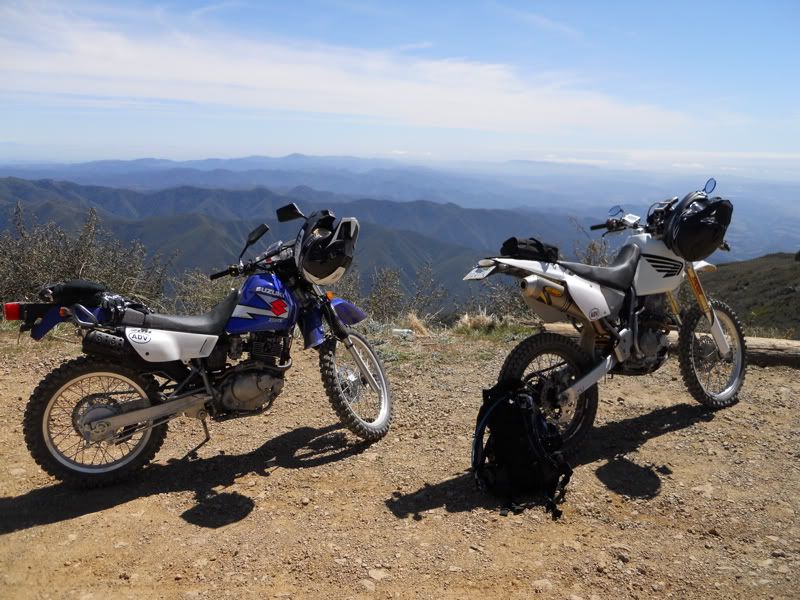
Hard to see in the first picture but I've made a few changes to the ol' XR. First there's the new shoes: A Shinko Trail Pro 255 rear and a Dunlop D606 front with the Tubeliss system installed. Also I haven't liked how naked my bike looks but I'm too cheap to buy graphics. So I made those wings on the side of the tank. Vote's out still, I'm not sure I like em.
But yeah what a great way to kick off spring break - especially since it's time for the ol' mule to go under the knife. It's been smoking a bit on startup for the past few weeks which points to worn valve guide seals. Having never been in the engine since I got it however, I'm expecting other issues to arise.
As it turns out, taking a peek at the internals revealed both good and bad news. The good news is these engines are just as indestructible as I've heard. The bad news is, my 16 year old bike has never been opened up so everything in there is original and worn right down to the service limits.
New parts are on order and should arrive later this week. The cylinder will go out for a bore and hone once the piston gets here, but something tells me this engine won't be done until after spring break is over. In the meantime, I've got plenty of carbon to remove and some engine parts to clean and paint.
Hard to see in the first picture but I've made a few changes to the ol' XR. First there's the new shoes: A Shinko Trail Pro 255 rear and a Dunlop D606 front with the Tubeliss system installed. Also I haven't liked how naked my bike looks but I'm too cheap to buy graphics. So I made those wings on the side of the tank. Vote's out still, I'm not sure I like em.
But yeah what a great way to kick off spring break - especially since it's time for the ol' mule to go under the knife. It's been smoking a bit on startup for the past few weeks which points to worn valve guide seals. Having never been in the engine since I got it however, I'm expecting other issues to arise.
As it turns out, taking a peek at the internals revealed both good and bad news. The good news is these engines are just as indestructible as I've heard. The bad news is, my 16 year old bike has never been opened up so everything in there is original and worn right down to the service limits.
New parts are on order and should arrive later this week. The cylinder will go out for a bore and hone once the piston gets here, but something tells me this engine won't be done until after spring break is over. In the meantime, I've got plenty of carbon to remove and some engine parts to clean and paint.
Tuesday, March 13, 2012
Why I want to run solid rubber tires
The past few days have seen a flurry of tire changes in my garage. The end result has been rather grim for such a seemingly benign task. First was a torn tube resulting in 2 changes for the same wheel. The second started off as a dent, but has now caused a very swollen and very tender spot just above my ear. They make this tool called a Bead Buddy:
It costs a whopping $13 and basically acts as a 3rd hand when trying to put a wheel on a rim. Not having one, here's what I used:
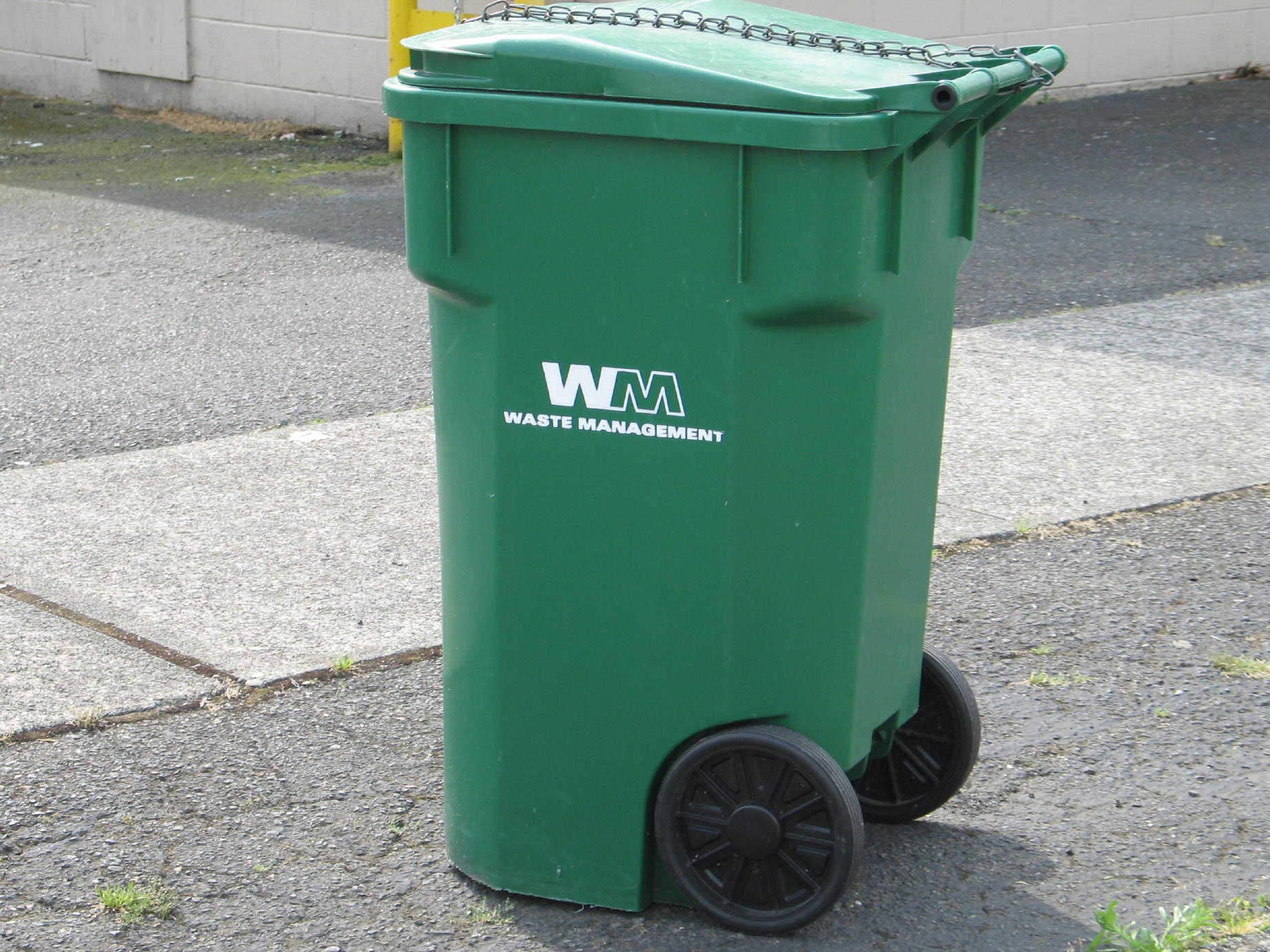
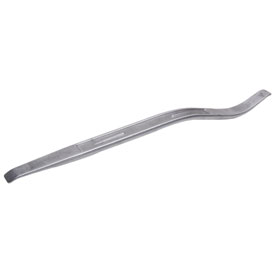
My emptied-that-morning recycle bin was no match for the leverage I was applying to the opposite tire bead and tipped over. The tire lever that had been wedged under the bin torpedoed into my temple. Although I don't recall there being a speech center in that area of the brain I must somehow be wired differently, because I suddenly developed an acute form of tourettes.
So why all this bother? Well first I needed a DOT tire on the rear of my XR, and since I finally found one for a 19" wheel, I had that to swap out. It's a Shinko Trail Pro 255. I installed it with a Tubeliss system, thereby eliminating the need for a tube. I'll eventually review both once I've had a chance to try them out.
Also, if you'll recall from an earlier post, my wife's recently acquired DR200 was in sorry need of new shoes. The stock Bridgestone Trailwings still had plenty of tread left on them (after 950 miles they'd better), but by looks alone I'd classify them as 20/80's - that is, 20% off road, 80% on road. Since we avoid pavement like its Mexico, clearly new tires were needed. Also these tires have the ominous nickname of Deathwings. Not exactly confidence inspiring.
The problem: Short wife and amazingly small stock tires. On one hand its great that the stock wheels are 21" front and 18" rear - that's pretty much the standard size for offroad and dual sport motorcycle tires. But when the stock tires have a sidewall height measured in nanometers, you're going to have a hard time finding anything that won't raise the seat height. If you want to go on organized dual sport rides that potentially might check your tires to make sure they're DOT legal, that narrows the field even further. I ended up compromising with a 90/90-21 Dunlop D606 up front for a net gain of about 1.5" in height over the stock tire. That's a pretty big increase but its a highly recommended tire and a good price (and it didn't look 1.5" taller in the store before it was mounted).
I did better on the back. For a loss of about .05" compared to stock, I mounted a 110/80-18 Pirelli MT-21. Seen here with the old Deathwing on the left.
Most people should read that and think "wuh?". That brings me to my rant of the post.
Metric tire sizes: A lesson in stupid
The 1st number you read is the width of the tire in millimeters, the second is the aspect ratio, and the third is the wheel size it fits. Ok width is easy, but most people don't know jack about aspect ratio unless they mess with wings or sails. Basically in this case its height as a percentage of width. So a 110/80-18 tire is 110mm wide, 80% of 110mm tall at the sidewall, and fits an 18" wheel. My question is: why even bother with the percentage at all? Anyone that looks at it isn't thinking "oh the tire is 80% as tall as it is wide", they're saying "WTF is 80% of 110mm and will it fit?". Tire makers went to all of the trouble of putting a 2nd number there, so why not make it as useful as possible? Label it 110/88-18, and don't make it a stupid math problem. Proof that tire sizes are the invention of a disgruntled 5th grade math teacher.
If you think that is pure idiocy, you'd almost be right. Standard tires don't even bother with sidewall height. A tire will just say 4.00x18. So that's 4.00" wide, fits an 18" rim, and 'WTF do you care how wide it is'. Buy it and when it doesn't fit, buy a smaller one, BUT BUY AMERICAN! (Again).
I swear how do these people breathe?
It costs a whopping $13 and basically acts as a 3rd hand when trying to put a wheel on a rim. Not having one, here's what I used:
+
My emptied-that-morning recycle bin was no match for the leverage I was applying to the opposite tire bead and tipped over. The tire lever that had been wedged under the bin torpedoed into my temple. Although I don't recall there being a speech center in that area of the brain I must somehow be wired differently, because I suddenly developed an acute form of tourettes.
So why all this bother? Well first I needed a DOT tire on the rear of my XR, and since I finally found one for a 19" wheel, I had that to swap out. It's a Shinko Trail Pro 255. I installed it with a Tubeliss system, thereby eliminating the need for a tube. I'll eventually review both once I've had a chance to try them out.
Also, if you'll recall from an earlier post, my wife's recently acquired DR200 was in sorry need of new shoes. The stock Bridgestone Trailwings still had plenty of tread left on them (after 950 miles they'd better), but by looks alone I'd classify them as 20/80's - that is, 20% off road, 80% on road. Since we avoid pavement like its Mexico, clearly new tires were needed. Also these tires have the ominous nickname of Deathwings. Not exactly confidence inspiring.
The problem: Short wife and amazingly small stock tires. On one hand its great that the stock wheels are 21" front and 18" rear - that's pretty much the standard size for offroad and dual sport motorcycle tires. But when the stock tires have a sidewall height measured in nanometers, you're going to have a hard time finding anything that won't raise the seat height. If you want to go on organized dual sport rides that potentially might check your tires to make sure they're DOT legal, that narrows the field even further. I ended up compromising with a 90/90-21 Dunlop D606 up front for a net gain of about 1.5" in height over the stock tire. That's a pretty big increase but its a highly recommended tire and a good price (and it didn't look 1.5" taller in the store before it was mounted).
I did better on the back. For a loss of about .05" compared to stock, I mounted a 110/80-18 Pirelli MT-21. Seen here with the old Deathwing on the left.
Most people should read that and think "wuh?". That brings me to my rant of the post.
Metric tire sizes: A lesson in stupid
The 1st number you read is the width of the tire in millimeters, the second is the aspect ratio, and the third is the wheel size it fits. Ok width is easy, but most people don't know jack about aspect ratio unless they mess with wings or sails. Basically in this case its height as a percentage of width. So a 110/80-18 tire is 110mm wide, 80% of 110mm tall at the sidewall, and fits an 18" wheel. My question is: why even bother with the percentage at all? Anyone that looks at it isn't thinking "oh the tire is 80% as tall as it is wide", they're saying "WTF is 80% of 110mm and will it fit?". Tire makers went to all of the trouble of putting a 2nd number there, so why not make it as useful as possible? Label it 110/88-18, and don't make it a stupid math problem. Proof that tire sizes are the invention of a disgruntled 5th grade math teacher.
If you think that is pure idiocy, you'd almost be right. Standard tires don't even bother with sidewall height. A tire will just say 4.00x18. So that's 4.00" wide, fits an 18" rim, and 'WTF do you care how wide it is'. Buy it and when it doesn't fit, buy a smaller one, BUT BUY AMERICAN! (Again).
I swear how do these people breathe?
Sunday, March 11, 2012
Rant: Adventure Bikes
Seriously I don't understand most of the riders on these machines. I see "Adventure Bikes" like this one quite often on trails around here. The BMW R1200GS:
Sure, its a nice looking bike. If I was going to travel Europe or Latin America by road, this or something like it would be on my short list. Comfortable, fairly nimble, room to add several month's worth of gear, and suspension made to soak up those cobblestones and potholes. It definitely has a purpose.
But why, oh why, would anyone want to do this?
That's 500 pounds of bike with just fuel and fluids on board. Apparently the best thing to do with a 500 pound bike is add storage all over it so you can carry, according to BMW, another 465 pounds!
To compare, my XR400 tips the scales at about 287 pounds when my oversized 3.8 gallon tank is full to capacity. Granted, my bike is terrifying on the freeway, but who gets a dual sport to ride on the freeway? Every organized dual sport ride I've seen has one thing in common: maximum dirt mileage, minimum on pavement. Or is that two? So to me I would think a bike that is better on dirt would be the obvious compromise. According to my adventure bike brethren, not so much.
I asked once, and the best reason anyone could give me why they'd rather ride 500 lbs of expensive parts just begging to be snapped off, is that an adventure bike makes even an easy trail challenging...
To me that's like deciding to live your life in a wheelchair because "legs are easy man".
Sure, its a nice looking bike. If I was going to travel Europe or Latin America by road, this or something like it would be on my short list. Comfortable, fairly nimble, room to add several month's worth of gear, and suspension made to soak up those cobblestones and potholes. It definitely has a purpose.
But why, oh why, would anyone want to do this?
That's 500 pounds of bike with just fuel and fluids on board. Apparently the best thing to do with a 500 pound bike is add storage all over it so you can carry, according to BMW, another 465 pounds!
To compare, my XR400 tips the scales at about 287 pounds when my oversized 3.8 gallon tank is full to capacity. Granted, my bike is terrifying on the freeway, but who gets a dual sport to ride on the freeway? Every organized dual sport ride I've seen has one thing in common: maximum dirt mileage, minimum on pavement. Or is that two? So to me I would think a bike that is better on dirt would be the obvious compromise. According to my adventure bike brethren, not so much.
I asked once, and the best reason anyone could give me why they'd rather ride 500 lbs of expensive parts just begging to be snapped off, is that an adventure bike makes even an easy trail challenging...
To me that's like deciding to live your life in a wheelchair because "legs are easy man".
The Stable Grows
Ok so my bike is fat, dumb, and happy.
Older tank, same XR
Problem is, my wife enjoys riding too. Mostly Glamis and other SoCal dunes on her YFZ before we sold it. All she had currently was a 1997 YZ 80 - her first 2-wheeled bike.
I should mention I love two strokes. I started riding them when I was 13, and pretty much stayed on them until the XR. Unfortunately something happened during that time, I got older. Sure I can still huck around my CR250, but god its such a chore to ride anymore.
Anyway my wife is very nearly amidget dwarf little person...she's short okay. Not just that she's 5' tall either, its because I swear she's a normal sized female from the waist up. That means finding a bike that fits her is always a challenge.
The YZ worked, but for a non-aggressive, female rider's first bike, it really wasn't the best choice. Plus now that I'm trying to get into this dual sport gig, she needs something legal to ride.
Part of me wanted to look at a street legal dirt bike again, indeed I seriously considered a few out there. Problem is, we're living back in California now, and have to deal with Californian DMV and the California Air Resources Board. Seriously these two bureaucracies could be the poster children for what is wrong with this state. I'll try to summarize: CARB realized that some people were legalizing dirt bikes, and ZOMG the DMV was letting them! Well these bikes hadn't been specifically tagged for emissions for on-highway use (i.e. the manufacturers didn't pay the protection money). So CARB insists DMV stop allowing this to happen, and yank all the current plates that the DMV already issued. The DMV, thankfully, is lazy, and says they'll stop issuing them as of the new calendar year, but grandfather anyone that already got a plate. This was in 2003. Because states have to recognize other state laws, you can still get a 2004+ street legal dirt bike, but it has to be plated out of state first, and run through some DMV hoops. The other option is to find a "cool" DMV inspector that will let you slide without the required emissions sticker. There's a couple sites online that have a regular DMV inspector and do this for a fee in California. They only do it to 2002 or older bikes to make it less obvious to anyone looking. Problem is that you have no legal ground if CARB/DMV ever notices that you plated a bike (any year bike) after the January 31, 2004 cutoff. You'll lose your plate and can't do a thing about it, even if it was a previous owner that got it plated. So if you buy any plated bike in California, you need to find out what year it was first plated, if it was out of state, etc. Hassle...
So ideally then, I was looking for a purpose built, from the factory, dual sport - and it needed a seat low enough that a turtle could mount it. Lemme tell ya, that's a really short list! We ended up finding a pretty nice little ride though, a 2003 Suzuki DR200SE with 950 original miles on it:
Sure it looks like its from 1982 with that giant headlight, accordian shock covers, and IDKWTF rear fender, but its a pretty solid little machine. I especially like that its very easy to ride. The power delivery is more like a scooter than a motorcycle, which is good for somebody still learning. It's a tad heavy, and air cooled like my XR which can be good or bad, depending on how you look at it. I made a few easy adjustments and managed to lower it a tad more than its standard 31" seat height. As a tribute to CARB, I ripped the California emissions EVAP canister off as quickly as I could. It will be set ablaze and sent drifting into the Pacific on a raft shortly. I also replaced the stock tires with something more dirt oriented. She's now able to get the ball of 1 foot down. Since I sold her YZ and some other old toys I hadn't been using it was another "free" bike.
Neither my wife nor I have any desire to ride a motorcycle on the street - too many SUV's trying to make motorcycle hood ornaments. We fully intend to truck our bikes to any trail more than a few miles away. The plates are just there because: 1) SoCal actually has a lot of small riding areas separated by a couple miles of tarmac. 2) SoCal has even more off road areas that are only legal to plated 4x4's and motorcycles. Really beautiful places too. It's my goal to share some of these gems via this blog.
Older tank, same XR
Problem is, my wife enjoys riding too. Mostly Glamis and other SoCal dunes on her YFZ before we sold it. All she had currently was a 1997 YZ 80 - her first 2-wheeled bike.
I should mention I love two strokes. I started riding them when I was 13, and pretty much stayed on them until the XR. Unfortunately something happened during that time, I got older. Sure I can still huck around my CR250, but god its such a chore to ride anymore.
Anyway my wife is very nearly a
The YZ worked, but for a non-aggressive, female rider's first bike, it really wasn't the best choice. Plus now that I'm trying to get into this dual sport gig, she needs something legal to ride.
Part of me wanted to look at a street legal dirt bike again, indeed I seriously considered a few out there. Problem is, we're living back in California now, and have to deal with Californian DMV and the California Air Resources Board. Seriously these two bureaucracies could be the poster children for what is wrong with this state. I'll try to summarize: CARB realized that some people were legalizing dirt bikes, and ZOMG the DMV was letting them! Well these bikes hadn't been specifically tagged for emissions for on-highway use (i.e. the manufacturers didn't pay the protection money). So CARB insists DMV stop allowing this to happen, and yank all the current plates that the DMV already issued. The DMV, thankfully, is lazy, and says they'll stop issuing them as of the new calendar year, but grandfather anyone that already got a plate. This was in 2003. Because states have to recognize other state laws, you can still get a 2004+ street legal dirt bike, but it has to be plated out of state first, and run through some DMV hoops. The other option is to find a "cool" DMV inspector that will let you slide without the required emissions sticker. There's a couple sites online that have a regular DMV inspector and do this for a fee in California. They only do it to 2002 or older bikes to make it less obvious to anyone looking. Problem is that you have no legal ground if CARB/DMV ever notices that you plated a bike (any year bike) after the January 31, 2004 cutoff. You'll lose your plate and can't do a thing about it, even if it was a previous owner that got it plated. So if you buy any plated bike in California, you need to find out what year it was first plated, if it was out of state, etc. Hassle...
So ideally then, I was looking for a purpose built, from the factory, dual sport - and it needed a seat low enough that a turtle could mount it. Lemme tell ya, that's a really short list! We ended up finding a pretty nice little ride though, a 2003 Suzuki DR200SE with 950 original miles on it:
Sure it looks like its from 1982 with that giant headlight, accordian shock covers, and IDKWTF rear fender, but its a pretty solid little machine. I especially like that its very easy to ride. The power delivery is more like a scooter than a motorcycle, which is good for somebody still learning. It's a tad heavy, and air cooled like my XR which can be good or bad, depending on how you look at it. I made a few easy adjustments and managed to lower it a tad more than its standard 31" seat height. As a tribute to CARB, I ripped the California emissions EVAP canister off as quickly as I could. It will be set ablaze and sent drifting into the Pacific on a raft shortly. I also replaced the stock tires with something more dirt oriented. She's now able to get the ball of 1 foot down. Since I sold her YZ and some other old toys I hadn't been using it was another "free" bike.
Neither my wife nor I have any desire to ride a motorcycle on the street - too many SUV's trying to make motorcycle hood ornaments. We fully intend to truck our bikes to any trail more than a few miles away. The plates are just there because: 1) SoCal actually has a lot of small riding areas separated by a couple miles of tarmac. 2) SoCal has even more off road areas that are only legal to plated 4x4's and motorcycles. Really beautiful places too. It's my goal to share some of these gems via this blog.
Subscribe to:
Posts (Atom)